
We can now drive anywhere in Tartu — come book a ride
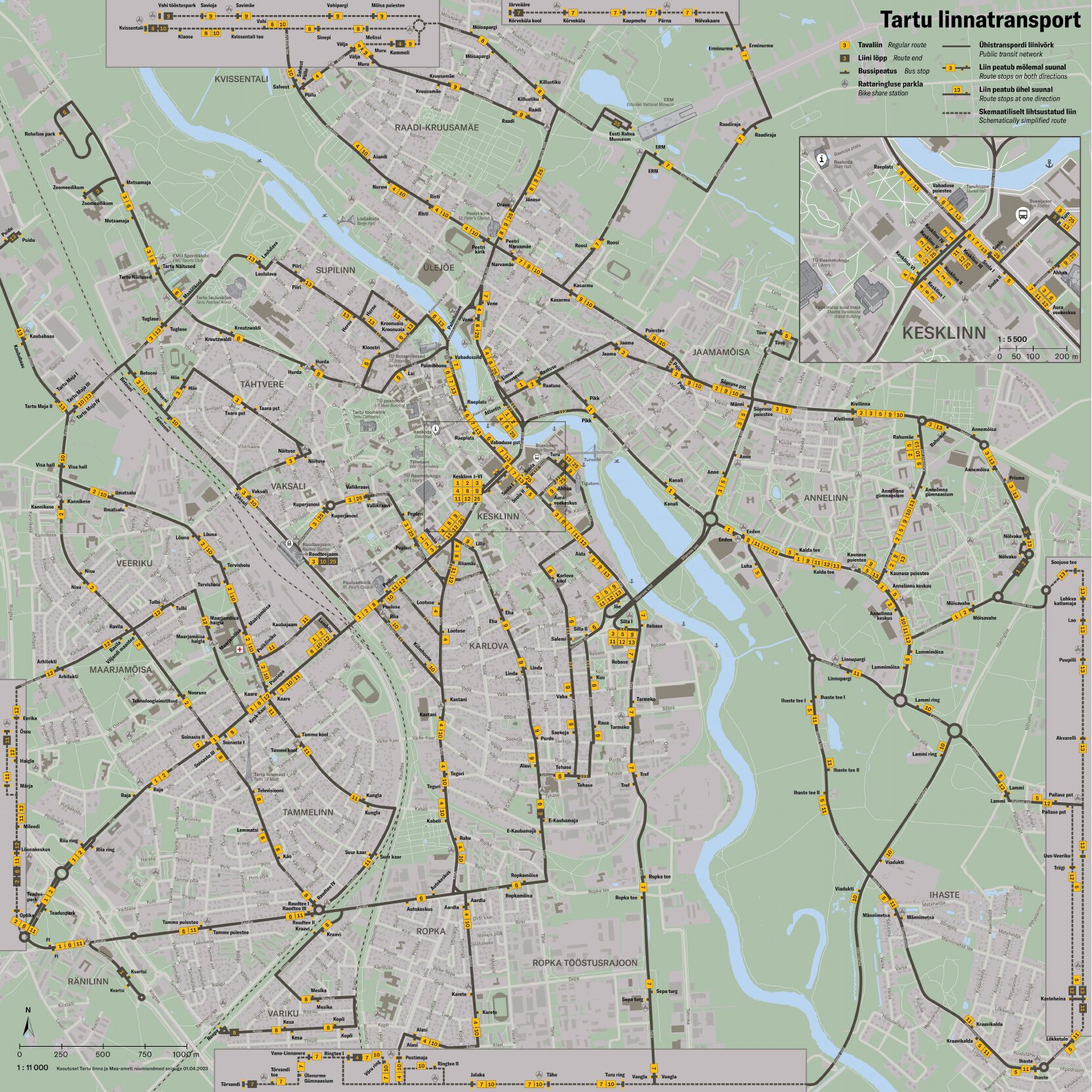
In 2021 we set ourselves a goal: drive anywhere in Tartu by 2026. Today we have achieved it. Our self-driving car can drive between any two bus stops in the city — 346 bus stops across 39 km² and 371 km of mapped lanes. As far as we know, this is the largest autonomous vehicle operation area in the world run by an academic institution.
You can book a demo ride on our demo ride page.
How we got here
When we first took the car out on real streets in 2020, we did it at 1 AM so we wouldn’t interfere with traffic. We drove 200 meters. The car didn’t even stay in its lane. It took another week of work before we could complete a 2.5 km lap on our demo track. Covering the whole of Tartu felt unreal at the time.
Five years later, we can do it.
Why bus stops?
Bus stops are evenly spread across the city, and most Estonians already know the closest one to their home. They have a sidewalk and space to stand, so they are natural places for a passenger to wait. The routes connecting them are wider than ordinary streets (because buses are wider), kept clear in winter, and pass through the places people actually need to reach. And sticking to them bounded our mapping effort to something achievable for a lab our size.
What the car can do, and where the safety driver steps in
The car stays in its lane, follows other vehicles, reacts to traffic lights and pedestrians on crosswalks, yields correctly at intersections, handles right-hand intersections, and navigates roundabouts.
Two front seats are reserved for our safety driver and computer operator, who ensure your safety at all times. The safety driver takes over in situations we cannot yet handle autonomously.
We are measuring how often the safety driver intervenes during these demo rides. Riders help us directly by choosing interesting routes — realistic, passenger-chosen trips across the city are exactly what we want to measure the car against.
Remote assistance
Alongside autonomy, we are testing remote assistance — a human operator connected to the car over the network who can help when the car is unsure. We are building this in three levels:
- Confirming the car may proceed across a stop line into an intersection.
- Drawing a custom trajectory with a mouse so the car can pass roadworks, accidents, or other non-standard obstructions.
- Full teledriving with a steering wheel and pedals, which is in the works.
The first two are already in use during demo rides.
What could we achieve with more resources?
While the top self-driving companies in the US and China are well ahead of us in both scale and capability, the gap in resources is larger still. By the time it started scaling commercially in 2024, Waymo had around 1,500 engineers and had raised more than €10 billion. We spent about €2 million on developing the solution and got the car to drive across Tartu with about five key engineers. That is roughly three orders of magnitude less money and more than two less people. What could we achieve with more resources? If you can help us find out, get in touch at adl@ut.ee.